
Svetitskhoveli Cathedral in the heart of Mtskheta
Svetitskhoveli Cathedral stands in central Mtskheta, where the church visit meets the paved streets, craft sellers and restaurants of the surrounding town. Its present main building dates from the 11th century. A high dome and cross-shaped form distinguish it within Mtskheta's group of religious monuments, while surviving wall paintings add another part of the architectural interest. Begin with the building and its place in the centre before exploring the stories associated with it.
The cathedral belongs to the UNESCO World Heritage property inscribed in 1994, together with Jvari and Samtavro. These three components give a town visit a coherent focus, but they are different religious places with different histories and positions. You can combine the cathedral neighbourhood with the central convent and arrange the hilltop monastery as a separate journey.
Patron, architect and the medieval building
Catholicos Melchizedek commissioned the cathedral, and Arsukidze is named as its architect. An earlier wooden church is associated with King Mirian and the 4th century. Keep these phases separate when thinking about the site: an early Christian association does not make every part of the standing cathedral an early Christian building. The medieval main structure is the starting point for understanding what you see today.
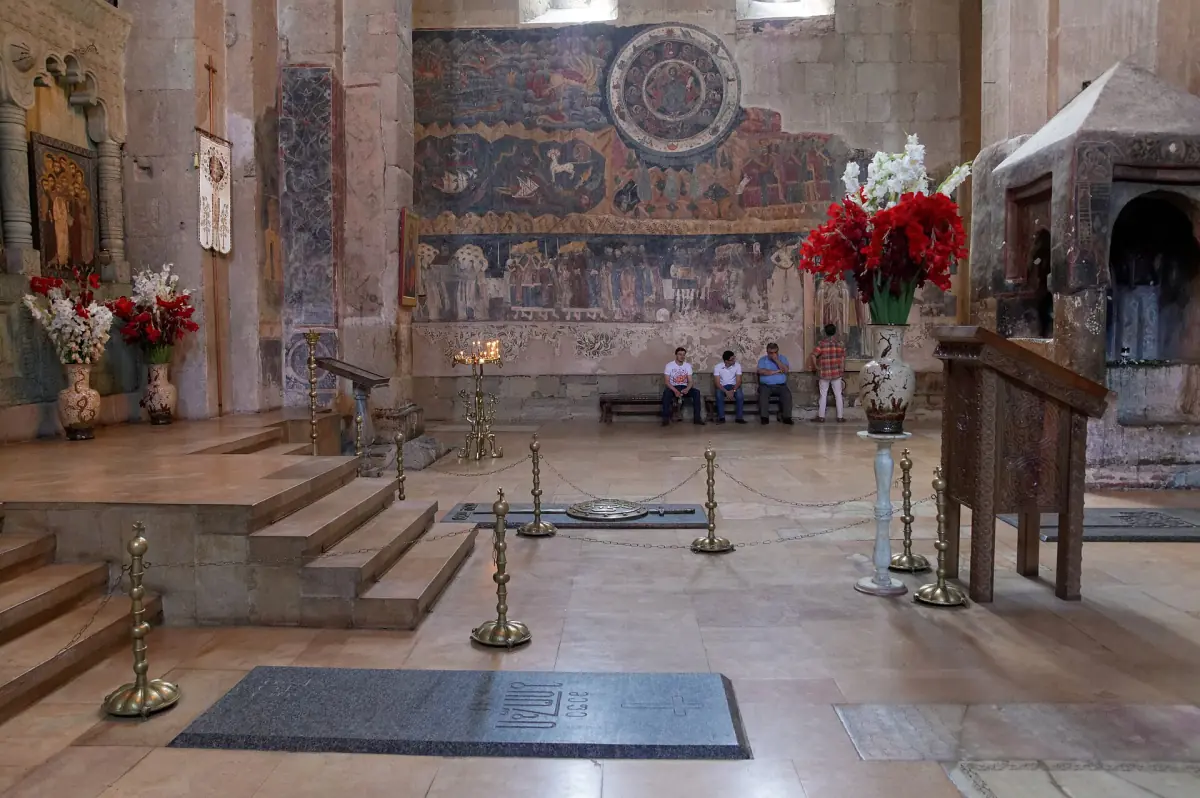
Its cross-shaped form, high dome and surviving wall paintings offer specific points of attention. Look at the relationship between the mass of the building and the dome rather than reducing the visit to the age of the monument. The architecture guide compares these features with Jvari's four-apse form and Samtavro's church buildings. That comparison gives the cathedral a place in a broader building tradition while keeping each monument distinct.
Our pick: Svetitskhoveli from Tbilisi
Our take: This guided vehicle trip includes a Svetitskhoveli stop.
Hand-picked tours, booked through GetYourGuide. Prices are indicative starting prices in euros (as of October 2026). Tap a tour for live availability and the current price in your currency.
A church circuit including Svetitskhoveli
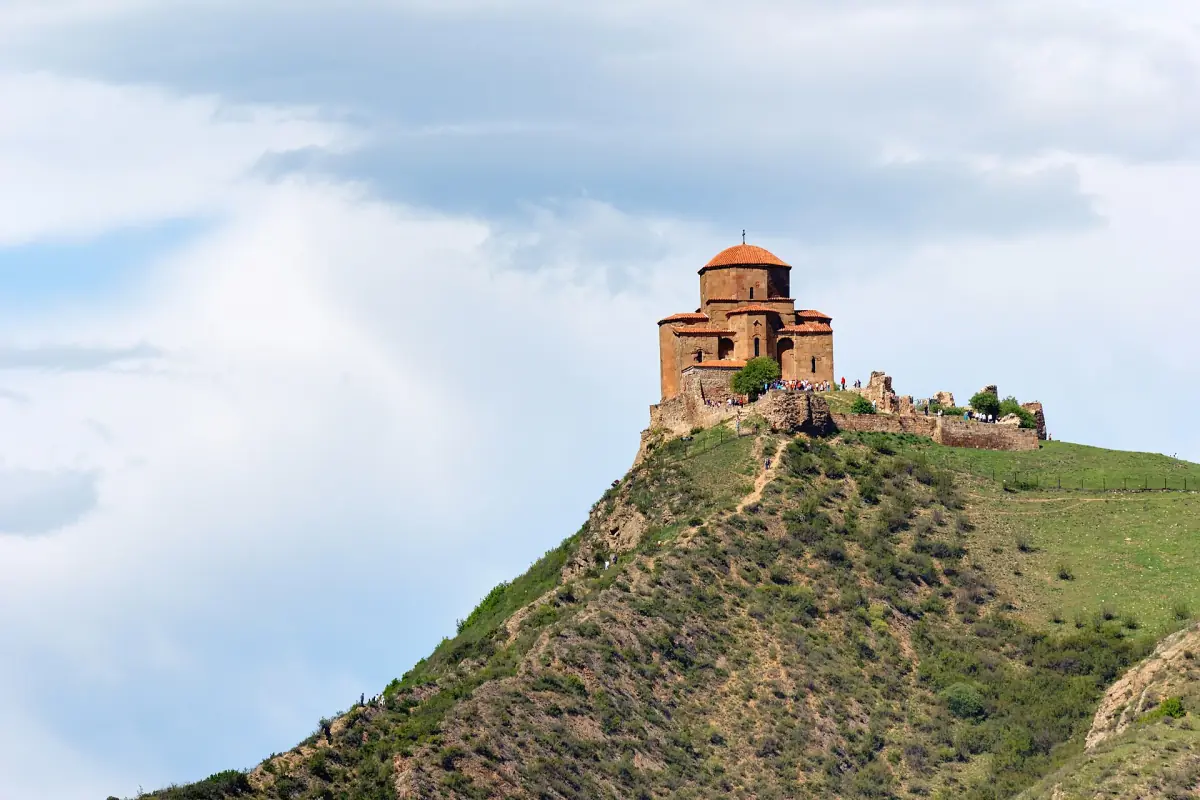
This four-hour excursion links the cathedral with Mtskheta, Jvari and Samtavro, with a professional guide and air-conditioned transport.
The robe, Sidonia and the life-giving pillar
The stories attached to Svetitskhoveli concern Christ's robe, Sidonia, a cedar and a life-giving pillar. These belong to religious tradition. They explain part of the cathedral's meaning as a sacred place, rather than serving as proof of the authenticity of a relic or of a miraculous event. Recognising that distinction allows you to take the traditions seriously without confusing them with a dated account of the building work.
Mtskheta was the capital of Kartli from the 3rd century BC to the 5th century AD, and Christianity became the state religion in 337. This political and religious background helps explain why the city's churches carry such significance. For the fuller sequence, use the Mtskheta history guide; at the cathedral, keep the focus on the building, its worship setting and the traditions associated with the place.
A church visit within the old town
The streets on the way to the cathedral include craft sellers, souvenir shops, wine sales and restaurants. Allow some of your time for that neighbourhood rather than arriving only for a quick entrance photograph. A walk through the centre can connect the cathedral with Samtavro Monastery, whose main church holds the tombs of Mirian and Nana. It provides a related royal and religious context within the same central part of town.
Treat the cathedral as a place of worship throughout your visit. Ask locally about the day's visiting arrangements and follow instructions at the church, including those concerning photography and clothing. The photograph on this page illustrates the interior's frescoes and icons; make your own photography plans according to the arrangements you encounter. A measured visit leaves room for the religious use of the building alongside your interest in art and history.
A guided route from Tbilisi
The excursion shown here visits Mtskheta, Jvari, Svetitskhoveli and Samtavro. Its stated duration is four hours, with a professional guide and transport by air-conditioned minivan or bus included. Meals and beverages are extra. It begins at Vakhtang Gorgasali Square in Tbilisi, making it a way to connect the central churches and the hilltop monastery within an organised outing.
Choose this route if you want those separate religious stops linked by transport and commentary. If you prefer to arrange the city journey yourself, use the getting-there guide and decide separately how to add Jvari Monastery. The relevant planning distinction is between the central town visit and the outlying hill, rather than between three supposedly adjoining entrances.
The cathedral in Mtskheta’s religious calendar
Svetitskhovloba was observed on 14 October 2026, with religious remembrance connected to Christ's robe and to Mirian, Nana, Sidonia and Abiathar. That was a past event with its own programme. It provides an example of the cathedral's continuing religious significance, not a future visitor timetable. For your own date, organise the visit around current local arrangements and give the church setting the same attention as the medieval stonework and paintings.
Questions about your visit
How old is the cathedral?
The present main building dates from the 11th century. An earlier wooden church is associated with King Mirian and the 4th century.
Is the robe story a historical claim?
The robe, Sidonia, cedar and pillar are part of religious tradition associated with the cathedral.
Which other church fits a central visit?
Samtavro is also in the centre. Plan the approach to Jvari separately because it stands on a hill east of town.