
Jvari Monastery above the river junction
Jvari Monastery occupies a rocky hill east of Mtskheta, overlooking the town and the meeting of the Aragvi and Mtkvari. Its setting makes the relationship between the religious monuments and their landscape visible. In the centre, you encounter the cathedral among streets and houses; from this hill, those buildings become part of a wider view across the river junction. Plan Jvari as a distinct stop rather than as another church on the central walking route.
The monastery is one of the three components of Mtskheta's UNESCO World Heritage property, alongside Svetitskhoveli and Samtavro. The property was inscribed in 1994. Visiting all three provides a useful comparison between an early hilltop church and the later main buildings in town, but Jvari also makes sense as a focused stop for its architecture and position.
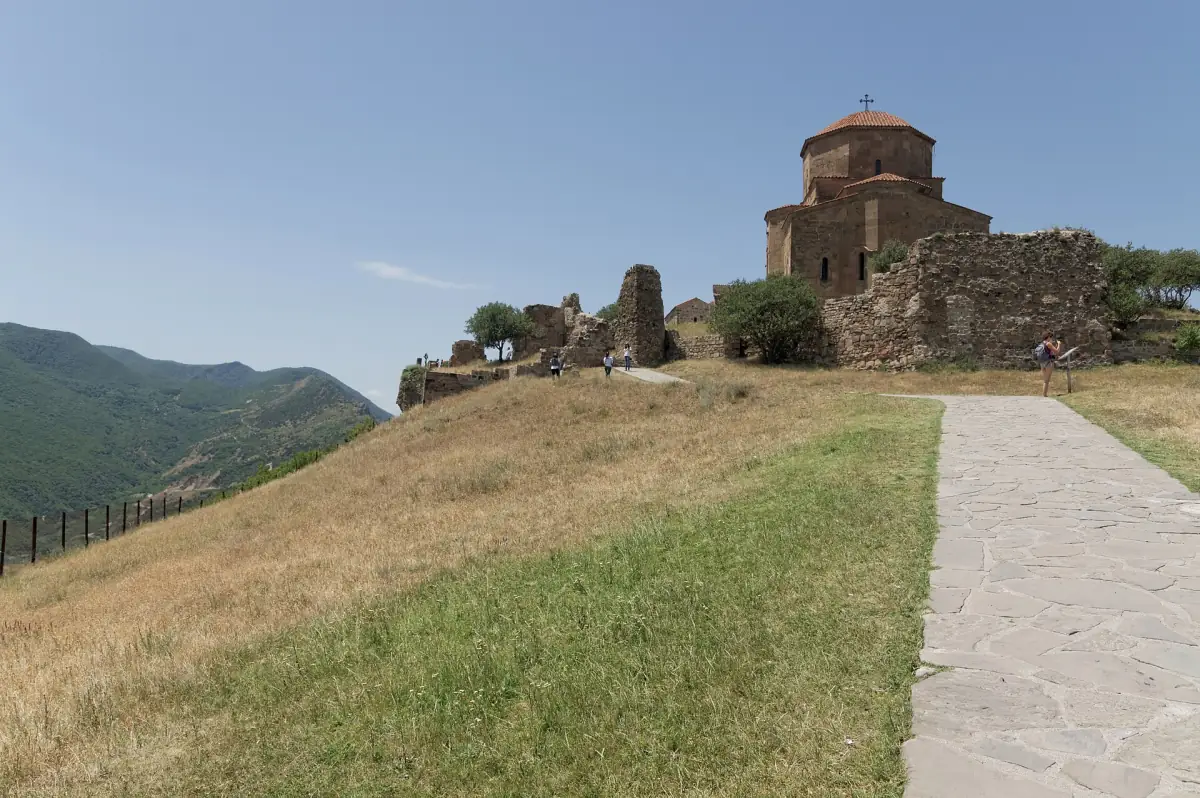
A church built around four apses
Jvari was built in 585 to 604 and is associated with Stephanos I. The defining architectural term is tetraconch: a design with four apses and niches. Keep that form in mind when looking at the church, because it explains more than simply calling the building old. Its spatial arrangement gives you a specific feature to compare with the high-domed, cross-shaped cathedral in the town below.
The architectural interest belongs within a monastic setting. Monks have lived at the monastery since 1996, so approach the stop as a visit to a religious place as well as a monument. Let local instructions guide your conduct and any photography. For a closer comparison of building forms across the three monuments, continue with the Mtskheta architecture guide.
Our pick: a Jvari day trip
Our take: Visit Jvari on a guided vehicle trip; entry to other attractions costs extra.
Hand-picked tours, booked through GetYourGuide. Prices are indicative starting prices in euros (as of October 2026). Tap a tour for live availability and the current price in your currency.
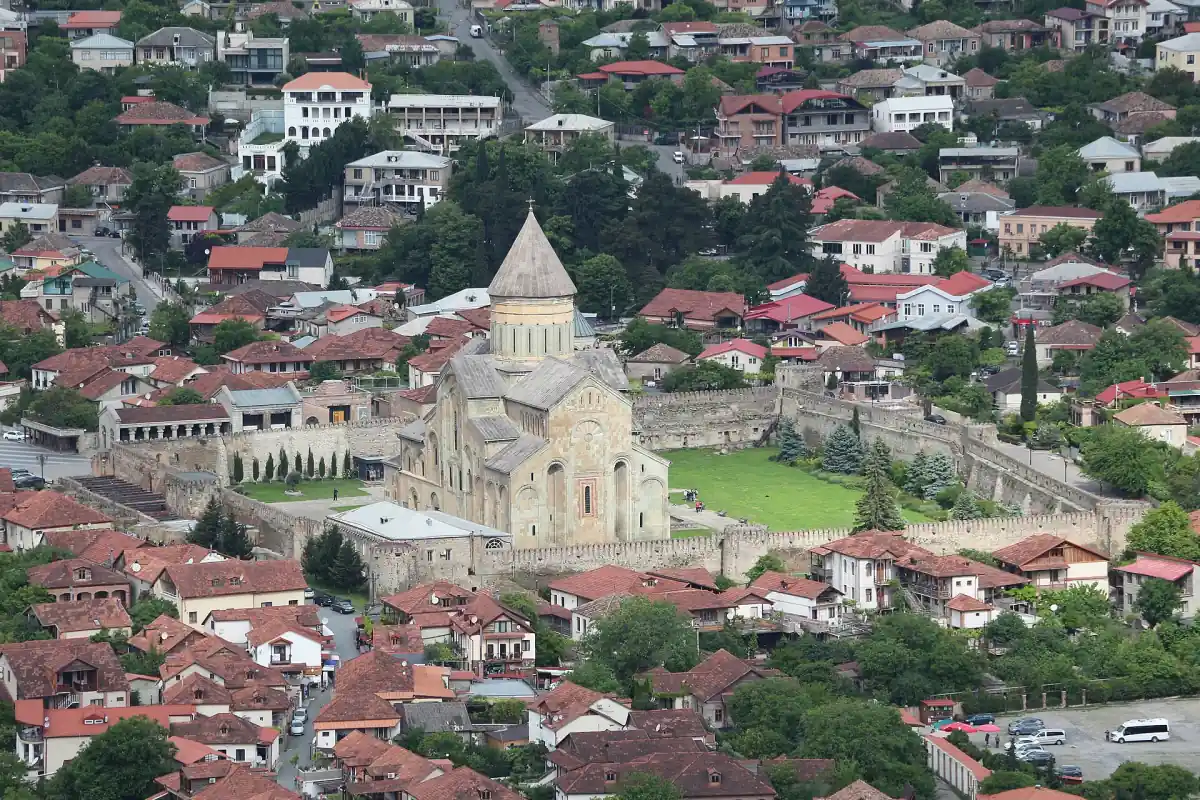
Jvari within a wider day excursion
Visit the monastery and Mtskheta on a route continuing to Gori and Uplistsikhe, with a professional guide and air-conditioned transport.
The view towards Mtskheta
The hilltop view brings together the Aragvi, the Mtkvari and the city at their confluence. That relationship helps explain why the monastery belongs in the same itinerary as the churches in town even though it requires a separate approach. Spend part of the visit looking at the landscape, then turn back to the church itself. The two aspects complement each other without making the viewpoint a substitute for understanding the building.
Jvari here is the monastery near Mtskheta. Keep that destination distinct from the Jvari Pass encountered on a journey towards Kazbegi. If you are arranging transport, use the monastery name and Mtskheta location together. This is particularly useful when a wider road itinerary contains several places with similar names or includes mountain travel as well as the town visit.
Reaching the hill from Tbilisi or the town
Reaching central Mtskheta and reaching Jvari are separate transport decisions. Minibus journeys from Didube are an option for the town, while a hilltop visit needs its own onward arrangements. A car journey or an organised excursion can incorporate the monastery approach. The transport guide sets out the town arrival choices; use it to build your route rather than treating a central arrival as the end of all your transport planning.
For a day with a substantial town walk, keep the cathedral neighbourhood and Samtavro together, then decide where the hill visit fits around them. A private Mtskheta tour is useful when you want the drives between separate sites built into the excursion. Choose the actual stops and services of the option you book, especially when considering another monastery outside the centre.
An excursion with Jvari and further stops
The outing shown on this page visits Jvari and Mtskheta as part of a wider route with Gori and Uplistsikhe. Its stated product duration is 10 hours. Transport in an air-conditioned vehicle and a professional guide are included. Food and drink, admission to Uplistsikhe and admission to the Stalin Museum in Gori are extra. The departure point is Europe Square in Tbilisi.
This format suits a day built around several destinations rather than an extended stay only at Jvari. If your main interest is the local religious monuments, compare the Mtskheta excursions by their route before choosing. A longer itinerary changes how the day is divided, even when the monastery stop itself is the same.
Continue with the churches in town
Svetitskhoveli Cathedral supplies the later architectural comparison, with its 11th-century main building and wall paintings. Samtavro Monastery adds the royal associations of Mirian and Nana and the setting of a convent. Seeing these places together makes the UNESCO grouping easier to understand: related religious monuments occupy different positions and carry different parts of Mtskheta's story. Allow time for those differences instead of planning three interchangeable photo stops.
Questions about your visit
Is Jvari in the old town?
The monastery stands on a rocky hill east of the city. Plan its approach separately from a walk around the cathedral.
What is a tetraconch?
At Jvari it describes the church plan with four apses and niches, a defining feature of the building.
What does the excursion include?
The wider day route includes an air-conditioned vehicle and a professional guide. Food, drink and the listed admissions at Uplistsikhe and the Stalin Museum are extra.