
Mtskheta architecture: three monuments to compare
Mtskheta architecture offers a concentrated introduction to medieval church building in the Caucasus. Jvari, Svetitskhoveli and Samtavro form the three components of the World Heritage property. Compare their plans, domes and settings rather than expecting matching buildings from one period. Jvari occupies a rocky hill east of the town, while the cathedral and Samtavro stand in the centre.
A church route with transport lets you bring the hilltop monument into the same visit as the central buildings. A guide provides context as you look at the forms themselves. Use the dedicated pages for Jvari Monastery and Svetitskhoveli Cathedral for closer introductions to each site; this page concentrates on the comparison between them.
Our picks: church routes
Our take: The guided vehicle routes connect Mtskheta with its churches. Choose the Samtavro route for a licensed guide, or the other excursions for air-conditioned transport and a guide.
Hand-picked tours, booked through GetYourGuide and Viator. Prices are indicative starting prices in euros (as of October 2026). Tap a tour for live availability and the current price in your currency.
Svetitskhoveli and Mtskheta from Tbilisi
- Professional guide
- Air-conditioned minivan or bus
A vehicle trip from Tbilisi with a professional guide.
Check availability →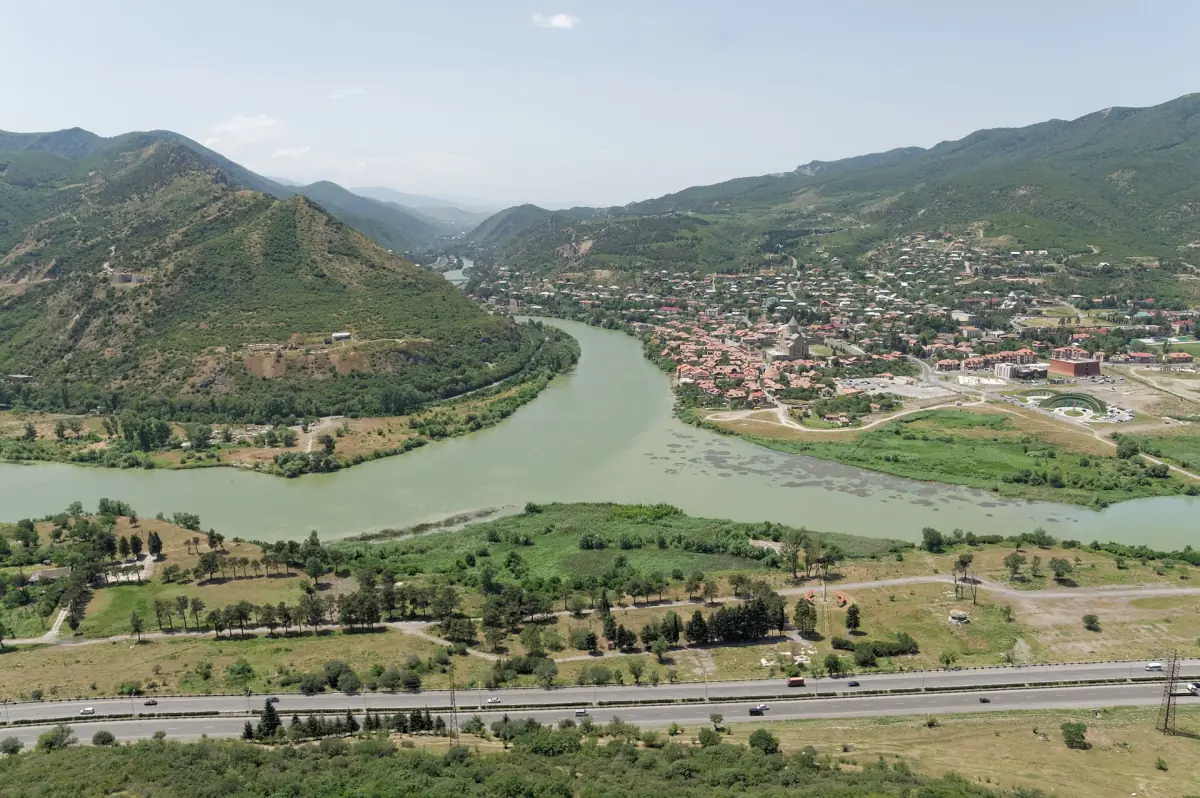
Mtskheta and Samtavro church route
- Professional licensed guide
- Air-conditioned vehicle
This route combines Mtskheta and Samtavro with Jvari.
Check availability →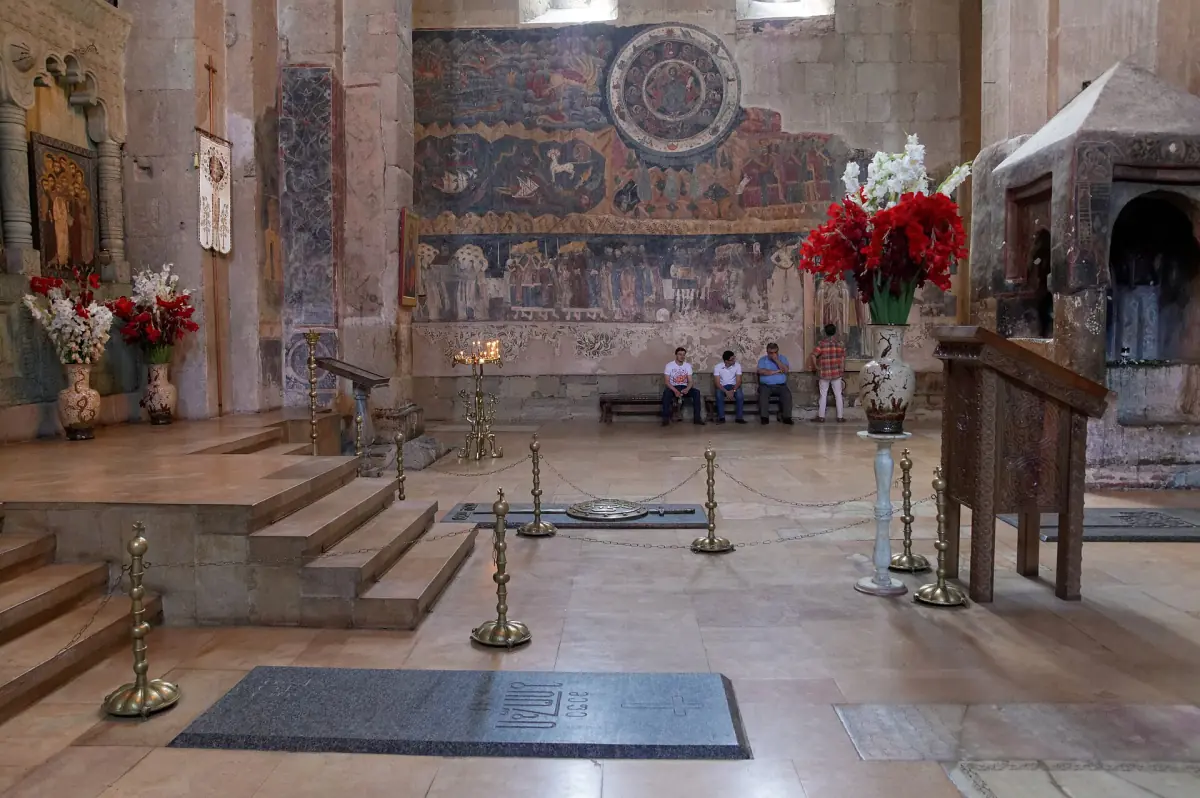
Mtskheta, Jvari and Samtavro trip
- Air-conditioned vehicle
- Professional tour guide
An excursion with a guide and an air-conditioned vehicle.
Check availability →Church routes for an architectural visit
These guided routes connect Mtskheta's churches with vehicle transport. Compare the named stops and meeting arrangements to choose a circuit around the buildings you want to study.
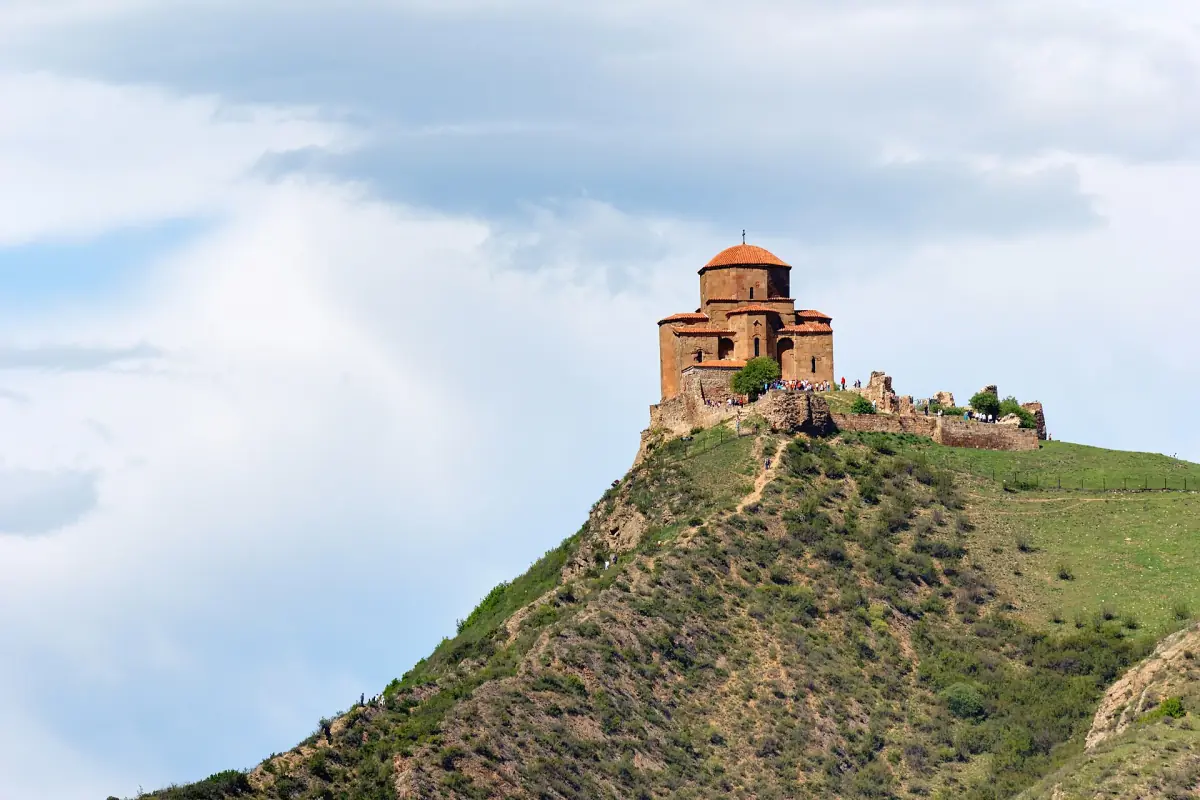
Jvari: understanding the tetraconch
Jvari's construction is dated to 585 to 604 and associated with Stephanos I. Its plan is described as a tetraconch, meaning a composition with four apses, together with niches. That gives you a concrete starting point for looking at the building: consider how the curved parts relate to the central space and how the dome contributes to the overall form.
The hilltop setting matters to the comparison. From Jvari, the town and the meeting rivers appear below, while the monastery itself occupies the eastern height. An architectural visit can therefore look at both the shape of the church and its relationship to the landscape. Arrange the journey to the hill separately from walking between the central sights.
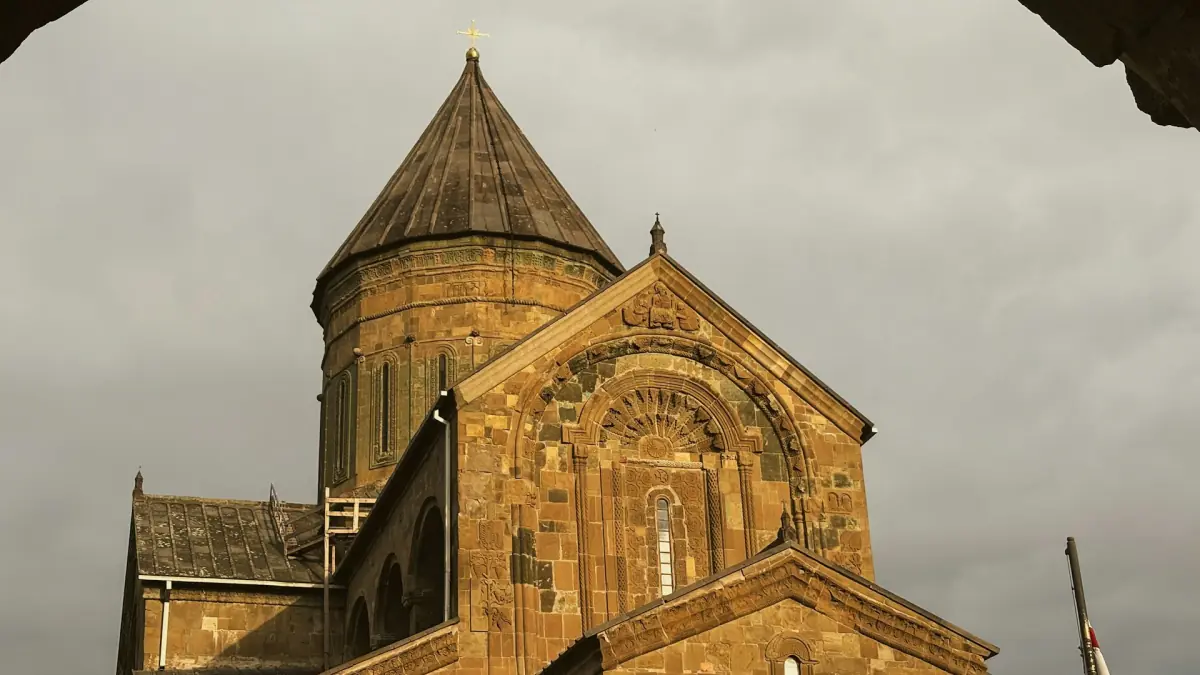
Svetitskhoveli: cross form and a high dome
The present main cathedral dates from the eleventh century. Catholicos Melchizedek commissioned it, and Arsukidze is named as the architect. Its cross-shaped plan and high dome give a different set of features to consider after Jvari. Instead of trying to rank the churches, look for the particular plan and spatial arrangement that make each one distinct.
Older building layers and later restoration are part of the wider heritage story. The standing cathedral should be understood as a building with a history, rather than as an untouched object from a single moment. For the political and religious chronology behind these places, turn to Mtskheta history; keeping that separate leaves more attention here for form, surface and space.
Samtavro and different building phases
Samtavro Monastery adds a complex of buildings to the comparison. Its main church is from the eleventh century, and the site also includes the small St Nino church. Consider these as distinct parts of the monastery. Avoid treating the age of a religious association as the date of every wall or equating the small church with the larger main building.
The monastery and the Samtavro burial ground are separate places. That distinction helps keep an architectural circuit focused: a visit to the monastery concerns its church buildings and religious use, while the necropolis belongs to another archaeological context. Choose an itinerary that names the monastery if that is the building complex you want to see.
Religious function
The buildings have religious roles as well as architectural significance. Samtavro is cared for by nuns and contains the graves of Mirian and Nana in its main church; Jvari also has a monastic community. Approach the spaces as places of worship. Follow local instructions during your visit and leave room in the schedule for the needs of worshippers.
Art and wall paintings
Wall paintings survive at Svetitskhoveli and form part of its artistic interest. They add another layer to the comparison with exterior stonework and the outlines of the domes. A church circuit provides a setting for discussing this art alongside the buildings. Let the guide explain how the painted surfaces relate to the religious space, and ask locally before taking interior photographs.
Shio-Mgvime as a further building comparison
For a separate extension, Shio-Mgvime has a church of John the Baptist dated to the 560s and 570s, alongside a Marian church commissioned by David the Builder in 1103 to 1123 and rebuilt after later destruction. It introduces further building phases outside the three World Heritage components. Explore the private tour options for a monastery visit that includes this additional journey.
Questions about the church buildings
What is a tetraconch?
It is a plan with four apses. At Jvari, the apses and niches are key features to consider when comparing the church with Svetitskhoveli's cross-shaped plan.
Can one route connect the three monuments?
The selected church excursions include guided visits with vehicle transport. The route from Vakhtang Gorgasali Square includes professional guiding and an air-conditioned minivan or bus; meals and drinks are extra.
Is Shio-Mgvime another World Heritage component?
The listed components are Jvari, Svetitskhoveli and Samtavro. Shio-Mgvime offers an additional architectural comparison on a separate monastery visit.